

SPEECH BY PRIME MINISTER : “30 YEARS AFTER THE ASIAN RENAISSANCE: STRATEGIC TAKEAWAYS FOR ASEAN” IN CONJUNCTION WITH THE CONFERMENT OF HONORARY DOCTORATE BY THE UNIVERSITY OF THE PHILIPPINES
SPEECH BY
YAB DATO’ SERI ANWAR BIN IBRAHIM
PRIME MINISTER OF MALAYSIA
“30 YEARS AFTER THE ASIAN RENAISSANCE: STRATEGIC TAKEAWAYS FOR ASEAN”
IN CONJUNCTION WITH THE CONFERMENT OF HONORARY DOCTORATE BY THE UNIVERSITY OF THE PHILIPPINES
MARCH 2, 2023 (THURSDAY)
PHILIPPINES
(Salutations)
Ladies and gentlemen,
- I stand before you this morning, greatly honoured by the presence of such an august gathering of intellectual luminaries, dignitaries, and eminent leaders. I feel doubly privileged and, at the same time, deeply humbled by the conferment of this honorary doctorate by the University of the Philippines, undoubtedly an institution of higher learning of great glory and Words escape me to express my profound and infinite gratitude. So, let me just say: Maraming salamat mula sa kaibuturan ng aking puso (Thank you very much, from the bottom of my heart.)
Ladies and gentlemen,
- In 1993, ASEAN was on the cusp of major expansion, which would eventually bring in all the then independent nations in Southeast Asia. Vietnam joined in 1995, followed by Laos and Myanmar two years later. Cambodia followed suit in 1999.
- ASEAN has changed dramatically in 30 years, which has led to greater achievements and opportunities even as we faced headlong our trials and We have gone from a monolithic global order to a bipolar world to now a multipolar world.
- Yet, certain things remain, or as some would venture to say: “plus ça change, plus c’est la même chose”– the more things change, the more they stay the That might be putting it rather cynically but let’s do a quick reality check.
- Global cooperation remains essential, ancient as well as conventional trade routes must be maintained for the stability and peace of the world, and that rests on ASEAN just as much as it does China, the US, or Europe or anyone else. The COVID-19 pandemic spared none of us. Geopolitical tensions and conflicts unleash consequences well beyond borders.
- For Asia in general, and particularly for ASEAN, our identities remain the same, that is, diverse and multicultural, yet united in the dignity of the nations we have carved out for ourselves in our colonial struggles and our adjustments to a globalised world. Conceptually, this was well articulated by the greatest of Malayans, José Rizal, in The Philippines a Century Hence, that this nation had gone from a scattered collection of islands, languages, cultures, and people but now is united as a Philippine Nation.1
- Nonetheless, Dr Rizal warned against the sliding into the comfort zone of routine which “is a declivity down which many governments ” Indeed, as we extrapolate this in the context of ASEAN, we could make a case that routine has led, to a certain extent, to the erosion of our bonds as individual states which must be united in the common cause of peace and stability. Even worse, routine has allowed the world to fall behind our future potential. Routine tells us to be divided in opinion and to hate one another, fuelled by the convenience and routine of social media, fake news, misplaced nationalism, and certainly, Islamophobia.
- The question is, what have we learned? We should not simply fear words – Communism, left, right, Muslim, Christian, Jew, capitalist, socialist, No words can be cast aside if they have not been thought through.
- Today, ASEAN is a larger and more integrated We are now a community, with three distinct pillars – political security, economic, and socio- political. The ASEAN Community, its focus and scope, is in itself, a significant achievement. Yet while being more integrated, it is an organisation that has retained its plurality and sovereignty.
- The doctrine of ASEAN centrality is supposedly cast in stone. Yet, some, both inside and outside ASEAN, have questioned the effectiveness and efficiency of the regional organisation and this mantra of centrality. Criticisms particularly focus on two of its principles – decision-making by consensus, and non-interference.
- These critics often miss the central point – ASEAN would not have grown or evolved without these key boundaries being in And lest we forget, we are now heading into a larger grouping, with the impending admission of Timor Leste as the eleventh member.
- When I wrote The Asian Renaissance2 in 1996, the East Asian region had undergone a period of transformative economic growth. The region’s average annual GDP growth for the three decades to 1996 was approximately 6.5 per cent.
- These were heady days indeed. It gave Asians a spring in their step, a renewed sense of confidence in ourselves, no doubt grounded in the gritty and harsh reality of decades of hard work, frugal spending, self-reliance and a strong focus on educating our youth.
- Today, decision-making by consensus continues to be a central tenet of ASEAN. This, however, does not mean that ASEAN should remain silent over developments in member states that affect the wider region, or particularly egregious violations of the ASEAN Charter by its own members. In all honesty, I believe that non-interference is not a license for indifference.
- Indeed, Wittgenstein, regarded by many as the greatest philosopher of the 20th century – as far as the West is concerned – reminds us that “Whereof one cannot speak, thereof one must be silent”.3 But that’s because words have power, greater than the destructive and hateful actions of a few. Yet, if left unwritten and unread, then we are all in a lot of trouble.
- Hence, when I mentioned in Bangkok recently about the need to temporarily carve out Myanmar, on account of the blatant human rights violations, it was said in the larger context of the imperative to stay true to one of the key ideals of ASEAN, which is nothing less than to stand for the cause of justice and the rule of law.
- In this regard, it bears repeating these immortal lines from Dr Rizal, who I must reiterate, remains truly an Asian Renaissance Man, that “Justice is the foremost virtue of the civilising races. It subdues the barbarous nations, while injustice arouses the weakest.”
- In the pursuit of justice, let us therefore celebrate our differences and praise our national Let us look beyond our divergences and amplify our commonalities so that we can stand as cooperative partners working towards the betterment of all our people in a just and peaceful world. Hence, cooperation and collaboration across the board in all the crucial matters that bind us as a solid multilateral, multicultural, and diverse regional grouping must be the way forward for ASEAN.
Ladies and gentlemen,
- Back in 1996, here in the Philippines, I spoke of the Christian poet Dante Alighieri and how in his Divine Comedy, he skilfully wove the political convulsions of the Italy of his time into a universal, and timeless drama of the human Now, even after seven centuries, the question is, are we still entrapped in selva obscura, our own hard and savage dark wood of prejudice, confusion and uncertainty, or have we freed ourselves from the stranglehold of captive geopolitics, media-influenced mindsets, and zero-sum approaches on questions of national sovereignty?
- Till today, I still ask myself: in the continuum of Machiavellian machinations to Metternichian manoeuvres, where do we stand? In focussing on the minutiae are we not at risk of missing the forest for the trees?
- And what exactly is this forest – this big picture that continues to elude our vision? I humbly submit that what was articulated nearly 30 years ago in The Asian Renaissance, remains valid in that we are still groping in the dark in search of the guiding ideas of civilization.
- Indeed, while it has been said that the articulation of moral and political ideas, socio-cultural values, the institution of the family, and faith, is no longer the exclusive domain of the modern West, the fact is that this is not borne out by The stranglehold of the international media, dominated by the rich and the powerful, in setting the narrative remains as tenacious as the proverbial lobster. Hence, in this exalted university and its rarefied air of academic and intellectual excellence, I urge for the resurgence of a robust and spirited cultural, social and political discourse of our time, without the need to be blindsided by the irrational exuberance of anti-Enlightenment or indeed unwarranted jingoistic rhetoric.
- To my mind, before us, remains a challenge so formidable that it transcends even the quest for a new world I say ‘remains’ because it isn’t one that has sprung up overnight but one that has latched on to us like a leech which simply refuses to let go. And this challenge is nothing short of the reconstruction of civilization itself. In facing this, we need to go beyond economic prosperity and political vitality to deep dive into the very foundations of humanitarian and civilizational ideals such as justice, compassion and moral uprightness.
- Without these firm foundations, no political order in the global context can remain for long. It is true that the Asian economy, as led by the phenomenal leapfrogging of China on to the top in terms of growth ranking, continues to gain And ASEAN, not merely being within the region in geographical terms, is also strategically linked within the framework of a rules based multilateral trading system that is now bolstered by the world’s largest FTA, namely, the Regional Comprehensive Economic Partnership (RCEP). Nonetheless, economic growth, no matter how robust and the accumulation of wealth, no matter how vigorous, should never be attained on the sacrificial altar of justice, compassion and moral uprightness.
- I believe that it is only when faith and religious practice as underscored with justice and compassion, finds its convergence with economic prosperity, will society stay on the path of real and meaningful progress.
Bereft of this, all the “voyage of our life will be bound in shallows and in miseries.”4 This is not an academic issue. We’ve seen this before and we are seeing it still. For instance, today we continue to see men being exploited by their fellow men, l’exploitation de l’homme par l’homme, in the political and economic spheres, an exploitation which has spread to the rape of the environment, impacting the physical world we live in.
- In light of this, talk of strategic pathways for ASEAN, going forward, will ring hollow if the agenda for social justice remains only on the back burner, or if concerns on climate change and green-house gas emissions are only given lip These matters cannot wait. Housing, education, health must be of paramount concern. Hence, in the last three months of my taking office as Prime Minister, I have placed poverty eradication, reduction of cost of living, food security as well as health and education as overriding concerns. Certainly, within the larger context of ASEAN, I believe these concerns are no less important, and if we pool our efforts in dealing with these recurrent challenges, that will take us to economic sustainability and greater ASEAN cohesiveness.
Ladies and gentlemen,
- In closing, let me congratulate the Philippines and the Filipino people for the courage of their convictions in the cause of You have demonstrated beyond the shadow of a doubt that you are able to confront arrogant powers and show to us, in ASEAN and beyond, that defeat in times of trouble is not an option.
- You have shown that democracy is not a mere slogan to be bandied about only in times of elections and that rightfully used, democracy does empower the people to determine their future for the better. In this regard, we too, in Malaysia, have recently undergone that same process where democracy has enabled me to take on the responsibility and trust of leading my people.
- Like the Philippines, I share with you that we will have no truck with religious intolerance, injustice, greed, and exploitation. On the contrary, like you too, good governance and democratic accountability will form the pillars of my administration that is underscored by the principles formulated as a philosophy of nationhood known as MADANI Malaysia.
- In ASEAN, while we have arisen from the shackles of the colonial masters, we must remain ever vigilant against our own home-grown masters and this warrants a revisiting and review of our ethics and values. But let us not be fettered by the fear of Instead, let us continue to build upon our communities on the firm foundations of a humane economy, compassion, justice, inclusiveness and shared prosperity.
Thank you.
1 José Rizal, The Philippines – A Century Hence, Editor: Austin Craig; Translator: Charles Derbyshire, 2011
2 Anwar Ibrahim, The Asian Renaissance, 1996
3 Tractatus Logico-Philosophicus.
4 Shakespeare, Julius Caesar
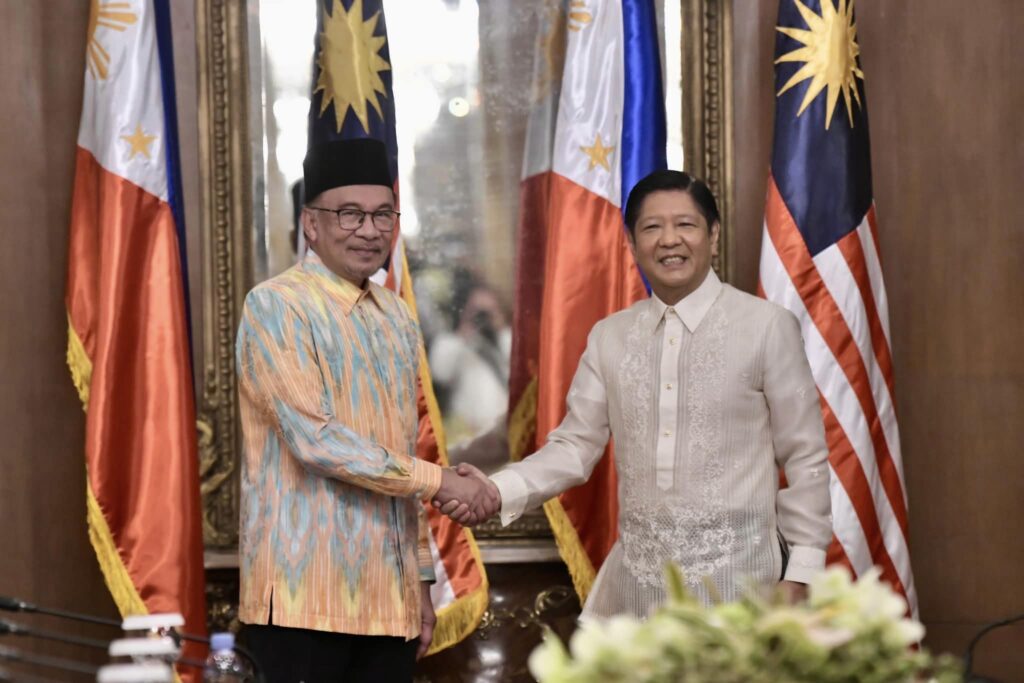
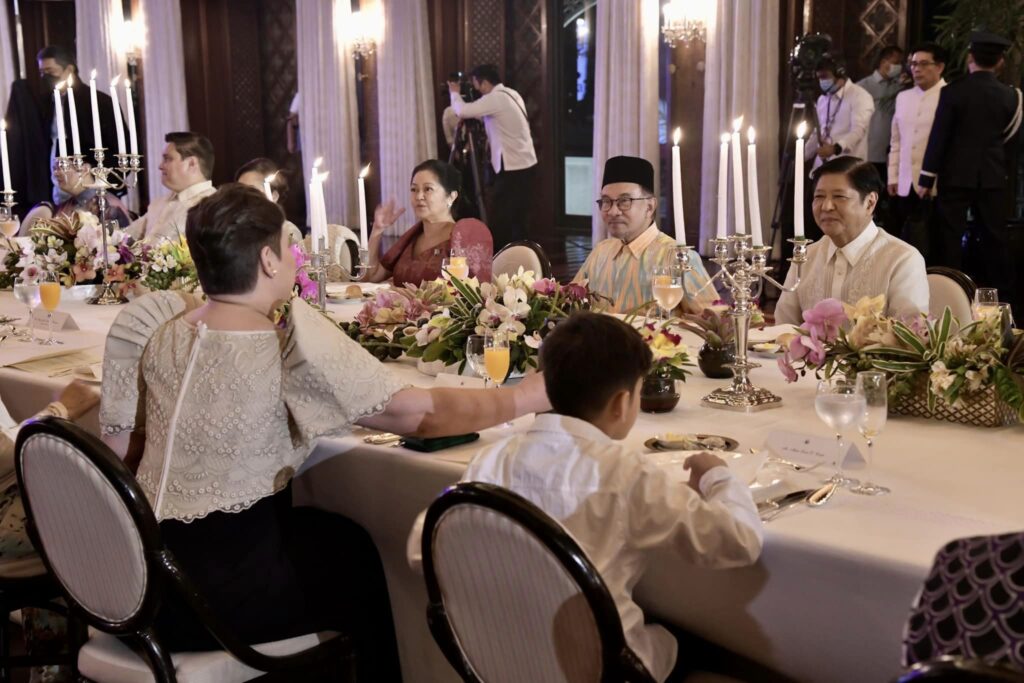
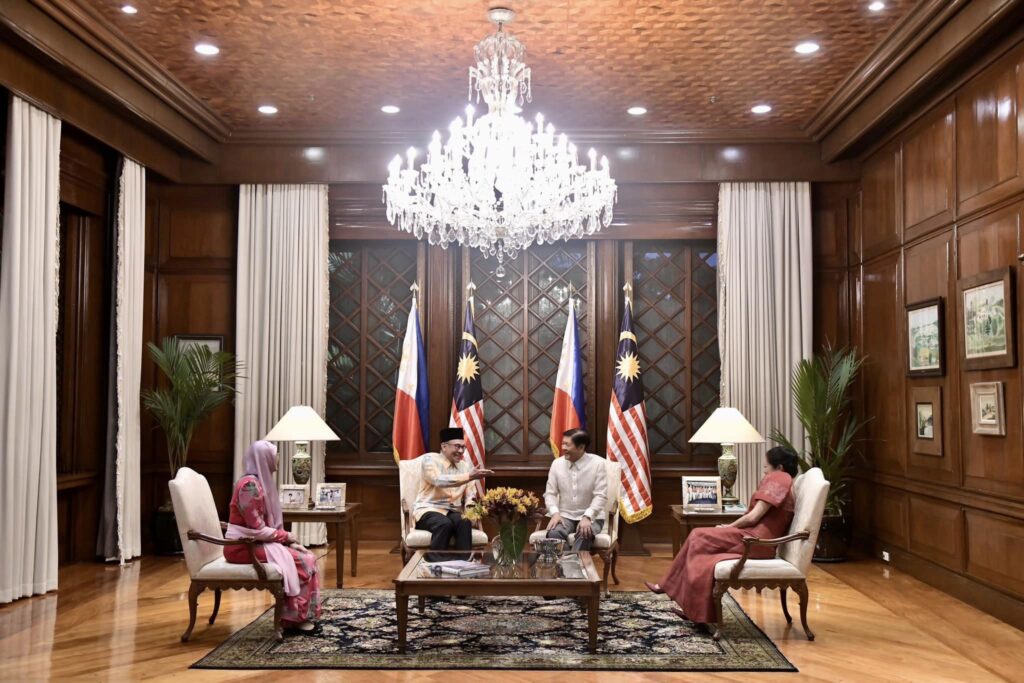
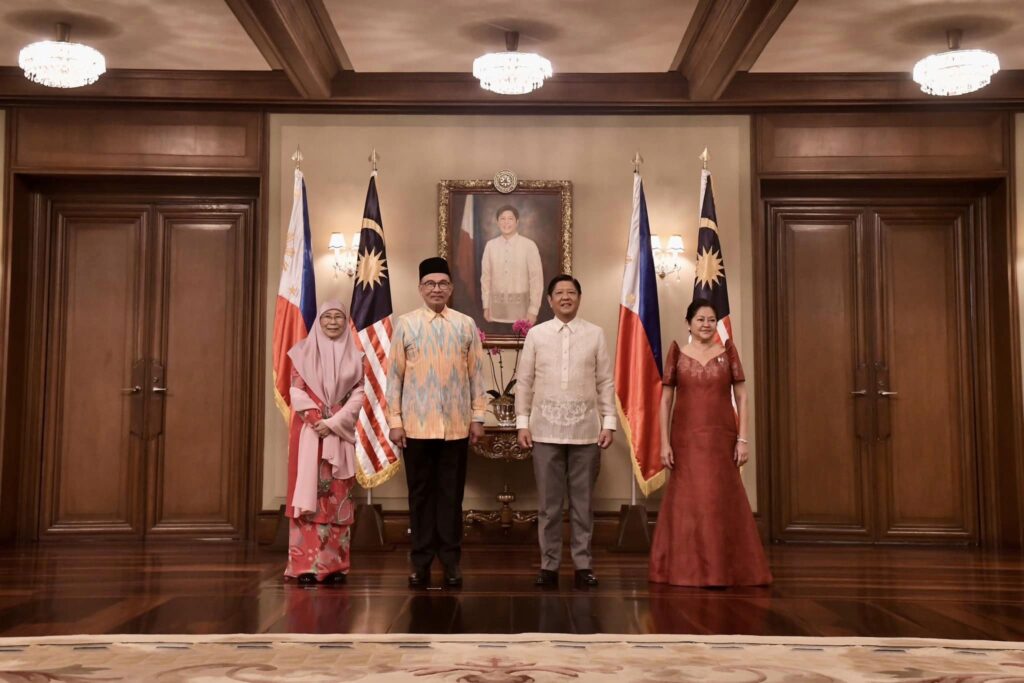
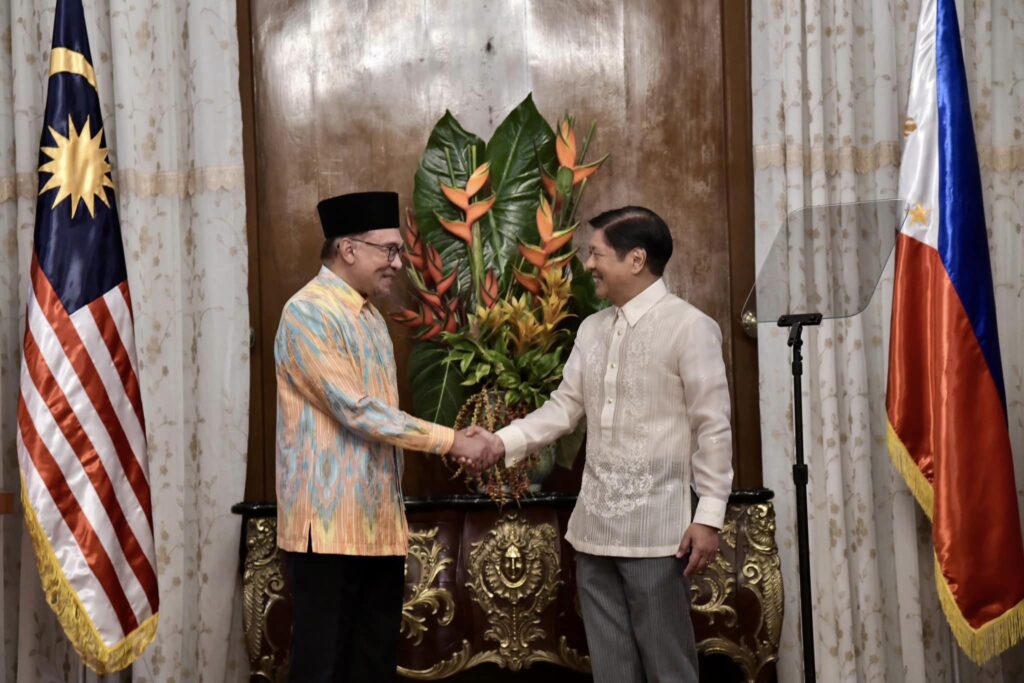
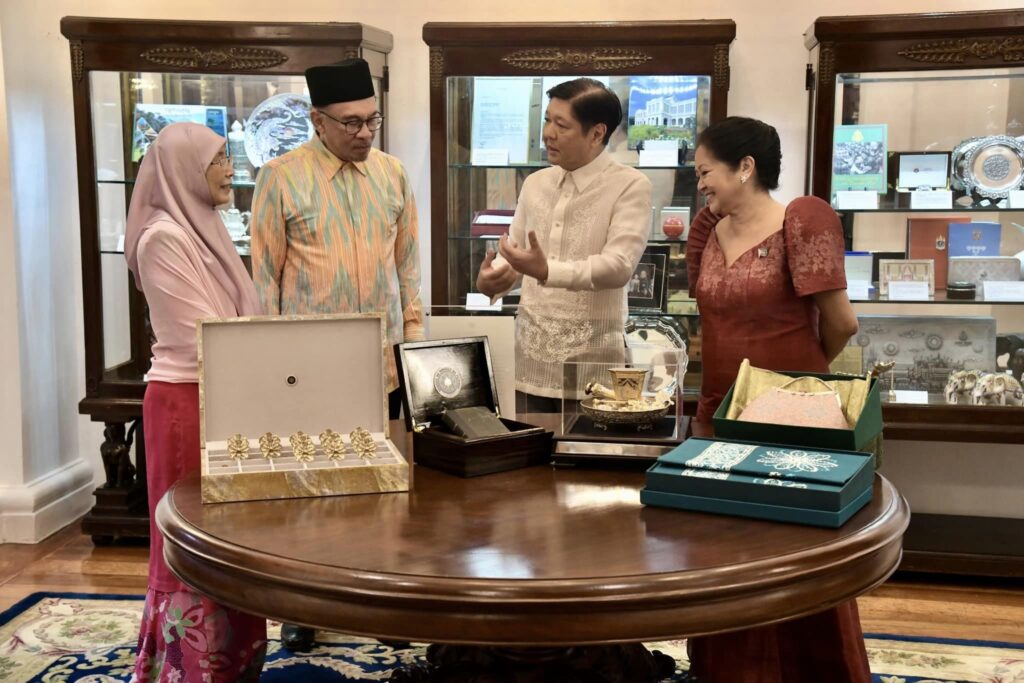
MANILA, 1 Mac (Bernama) — Malaysia dan Filipina bersetuju untuk terus meneroka kerjasama dalam pelbagai sektor dalam usaha mempertingkat hubungan dua hala kedua-dua negara ke tahap yang lebih tinggi.
Perdana Menteri Datuk Seri Anwar Ibrahim berkata kerjasama dua hala Malaysia dan Filipina adalah dalam pelbagai sektor yang antara lain merangkumi perdagangan dan pelaburan, pendidikan, kesihatan serta pertanian.
“Kami turut membincangkan bidang-bidang untuk kerjasama lanjut. Sektor baharu dan penting seperti industri halal, keterjaminan makanan dan ekonomi digital adalah antara bidang utama yang saya sarankan sebagai potensi kerjasama,” katanya.
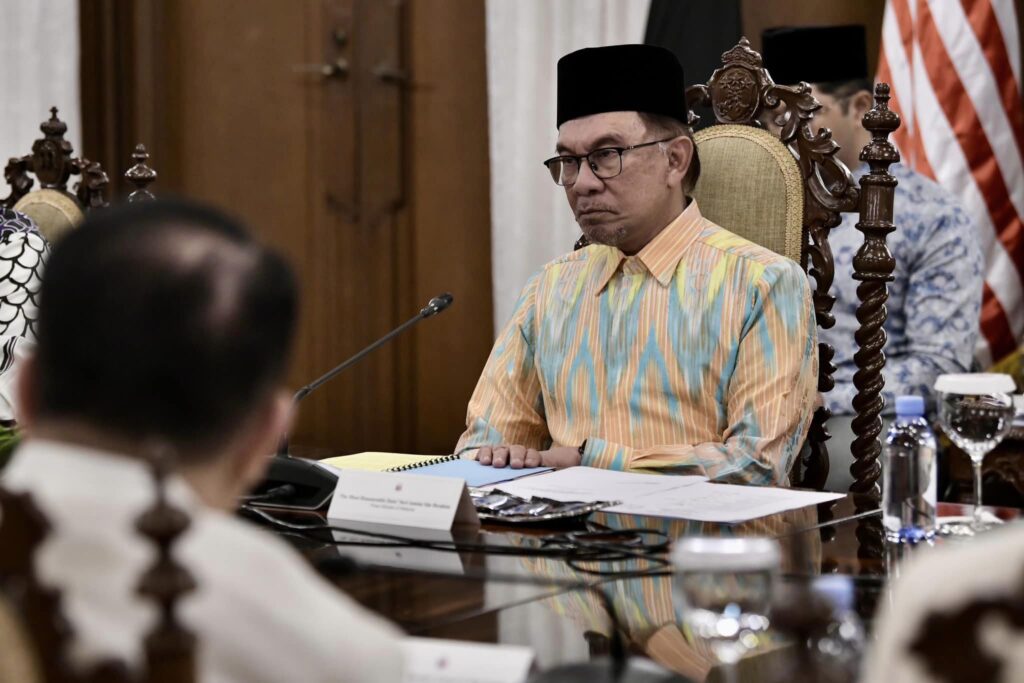
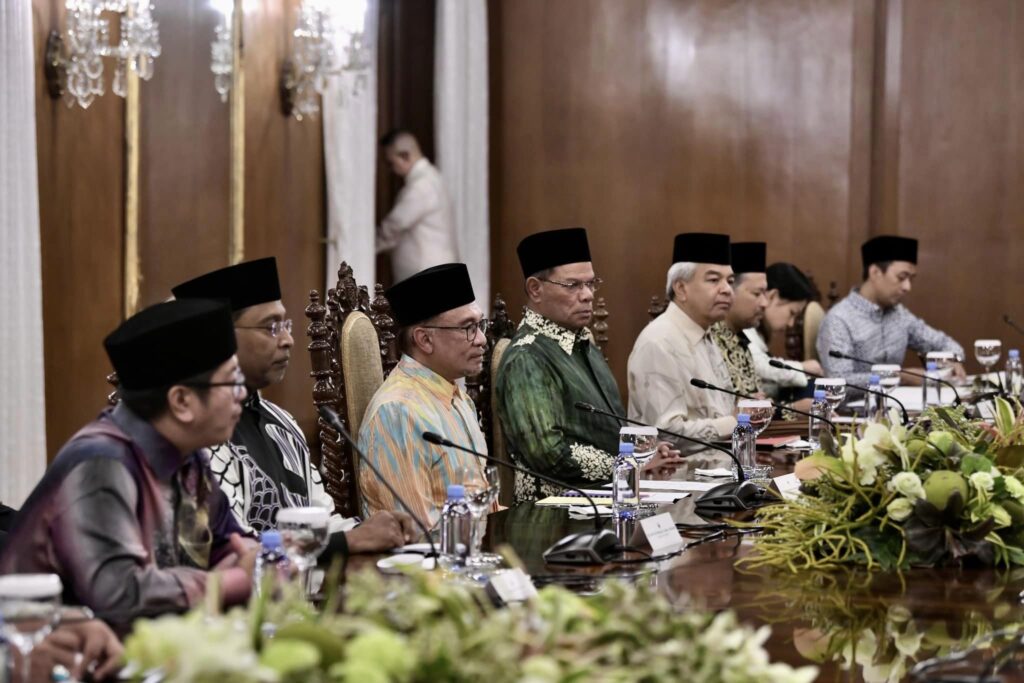
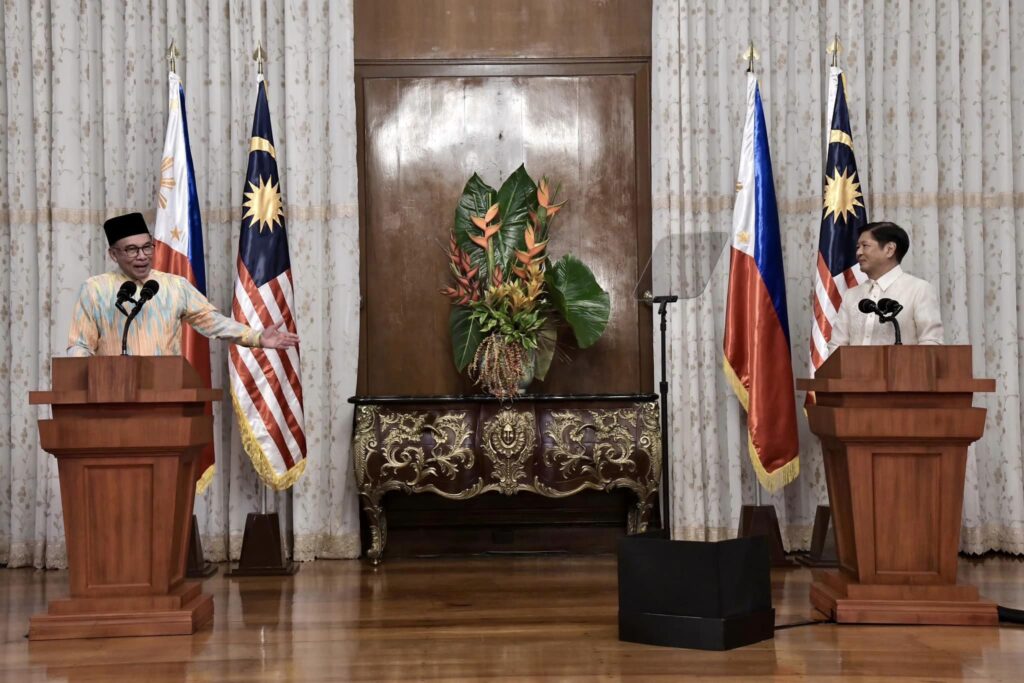
Beliau berkata demikian semasa sidang akhbar bersama dengan Presiden Filipina Ferdinand Marcos Jr selepas mengadakan mesyuarat dua hala di Istana Malacanang hari ini.
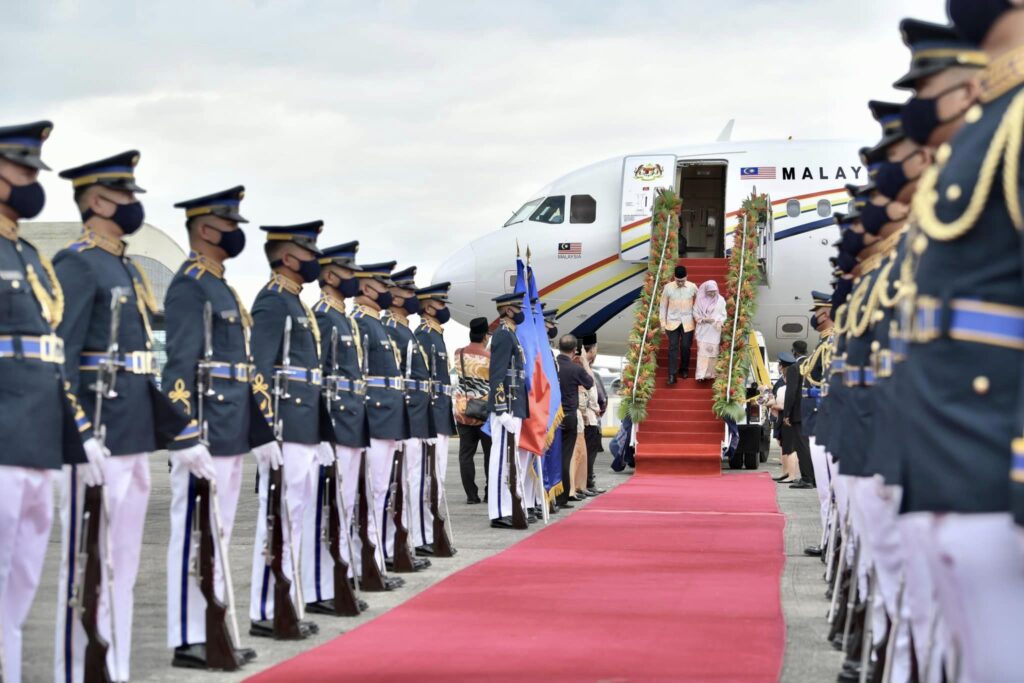
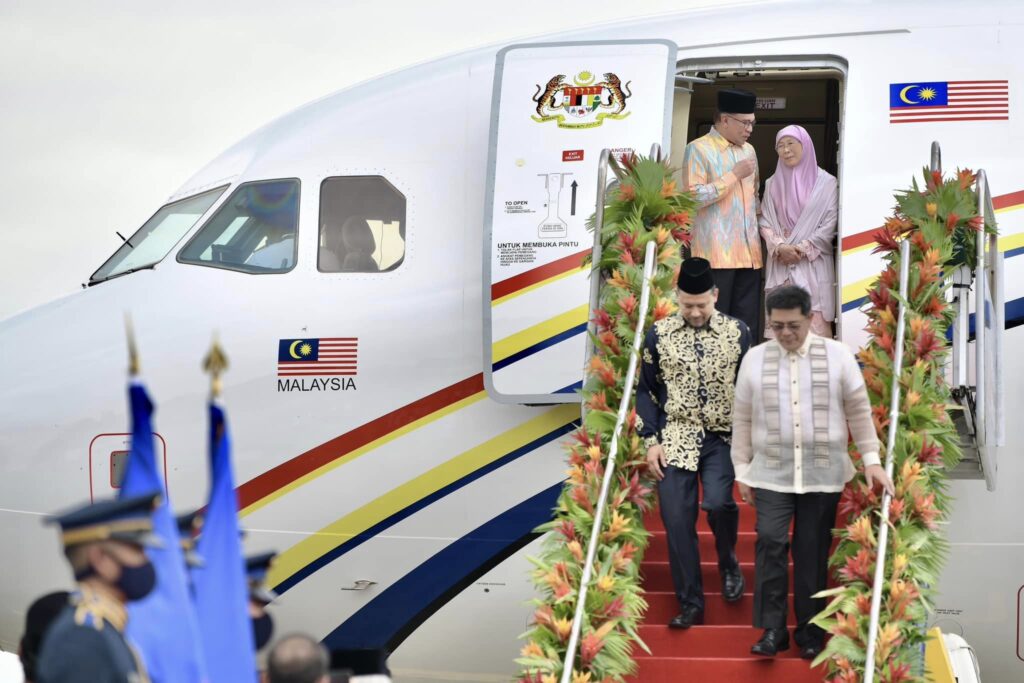
Terdahulu, pesawat khas yang membawa Anwar serta isteri, Datuk Seri Dr Wan Azizah Wan Ismail, tiba di Pangkalan Udara Villamor di sini bagi memulakan lawatan rasmi dua hari ke Filipina.
Anwar berkata kedua-dua negara turut bersetuju untuk meneruskan Mesyuarat Suruhanjaya Bersama ke-8 yang akan diterajui Menteri Luar masing-masing tahun ini pada tarikh yang sesuai.
Perdana Menteri juga bercakap mengenai langkah mempererat silaturahim rakyat kedua-dua negara selain meneruskan pertukaran budaya dan pelancongan.
“Saya mengiktiraf peranan diaspora Filipina di Malaysia serta sumbangan mereka kepada ekonomi kedua-dua negara dan sebagai anggota pengasas ASEAN dan kawasan pertumbuhan ASEAN Timur iaitu Brunei-Indonesia-Malaysia-Filipina, hala tuju serantau Filipina dan Malaysia adalah berpaksikan ASEAN,” katanya.
Menyentuh isu Laut China Selatan, Anwar berkata beliau telah membincangkannya dengan Marcos dan berkongsi pandangan sama mengenai perkara itu.
“Memandangkan isu ini adalah rumit, kita harus mencuba dan melibatkan diri serta menyatakan pendirian di peringkat pelbagai hala antara ASEAN supaya kita mempunyai pendekatan yang komprehensif dan mencapai penyelesaian memuaskan bagi masalah yang sudah lama tertangguh ini,” katanya.
Perdana Menteri turut meluahkan kebimbangan mengenai isu perbalahan di Myanmar yang masih tidak selesai sehingga turut menjejaskan Malaysia susulan jumlah pelarian yang ramai.
Beliau berkata jumlah pelarian Myanmar di Malaysia telah melebihi 200,000 orang.
“Presiden Marcos telah mengulangi keperluan konsensus lima perkara namun saya menyarankan untuk meneroka kaedah baharu bagi memujuk junta Myanmar agar berusaha dan bekerjasama sebagai satu pasukan dalam ASEAN serta menyelesaikan isu yang tertangguh dan tidak boleh dianggap sebagai isu dalaman semata kerana ia menjejaskan keselamatan serta kesejahteraan rantau ini, ” katanya.
— BERNAMA
MANILA, 1 Mac (Bernama) — Usaha mencapai kedamaian di Mindanao, yang terletak di selatan Filipina, harus berjaya kerana kegagalannya mampu menjejaskan bukan hanya negara itu dan Malaysia tetapi juga seluruh rantau ini, kata Perdana Menteri Datuk Seri Anwar Ibrahim.
Beliau memuji Presiden Filipina Ferdinand Marcos Jr kerana mengorak langkah yang besar dalam usaha memastikan proses damai di Mindanao mencapai kejayaan.
“Adalah menjadi tugas kita (Malaysia) sebagai jiran yang baik untuk menyokong usaha ini, kita harus memanfaatkan semua kaedah dalam hubungan dua hala dan pelbagai hala untuk mencapainya.
“Proses damai (di Mindanao) ini harus berjaya kerana ia bukan sahaja mampu menjejaskan Filipina dan Malaysia tetapi juga seluruh rantau ini,” katanya pada sidang akhbar bersama selepas mengadakan mesyuarat dua hala dengan Marcos di Istana Malacanang di sini.
Anwar tiba di Manila hari ini bagi memulakan lawatan rasmi dua hari, yang kelima ke negara ASEAN selepas dilantik sebagai Perdana Menteri Malaysia pada akhir tahun lepas.
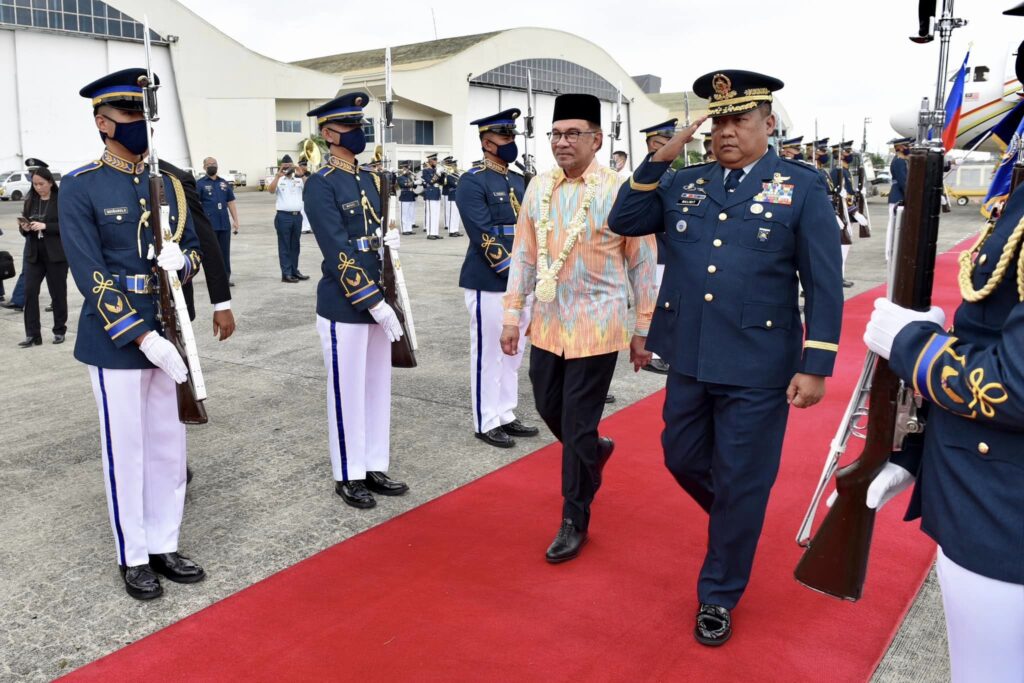
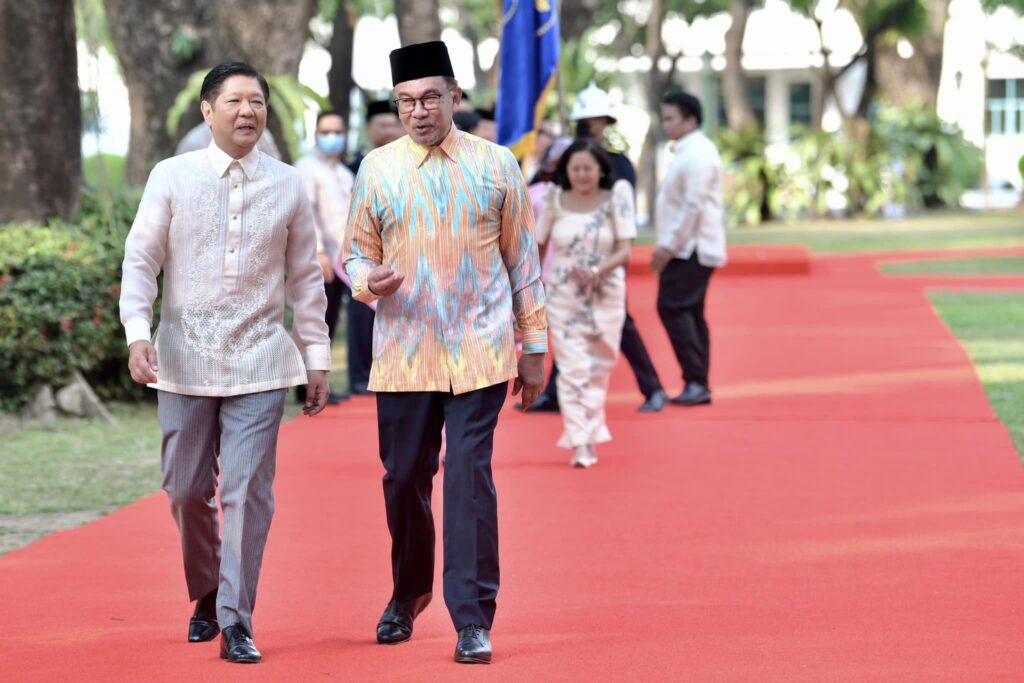
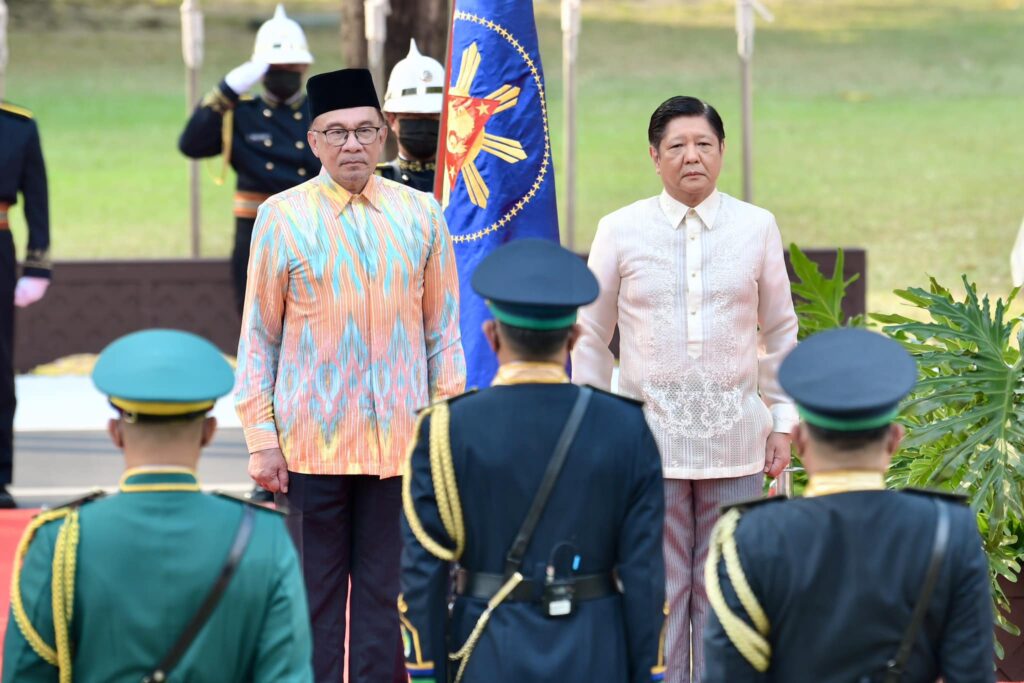
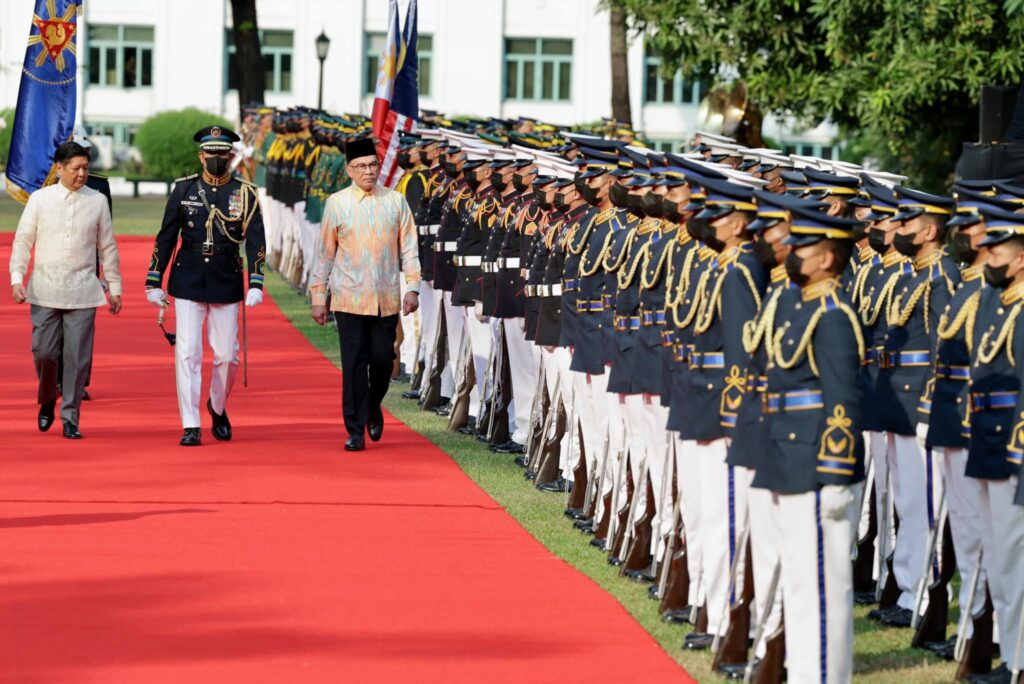
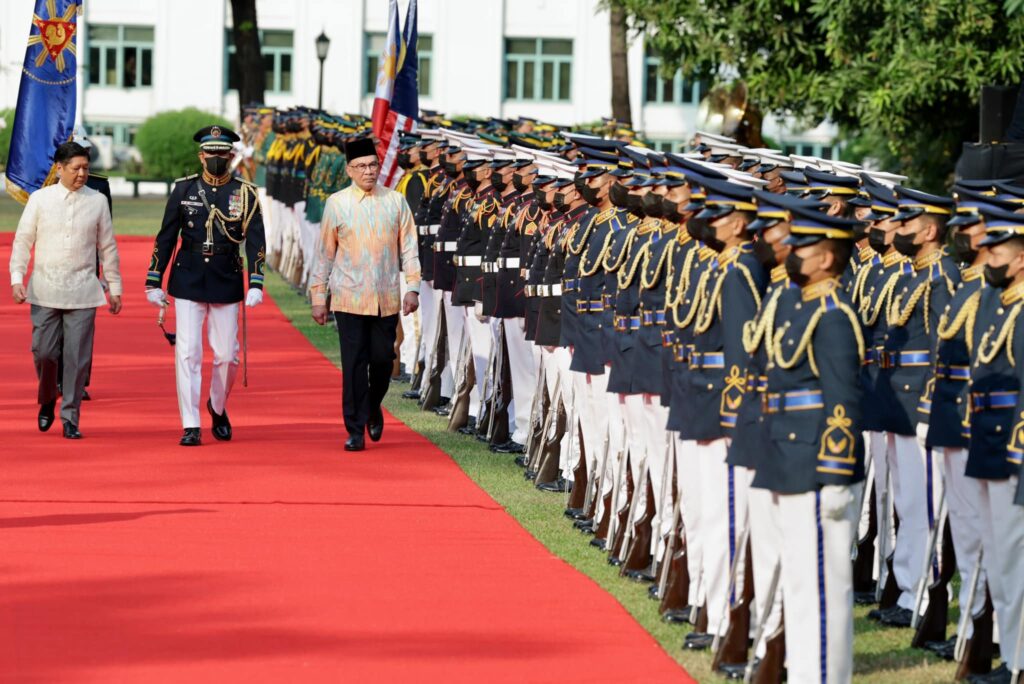
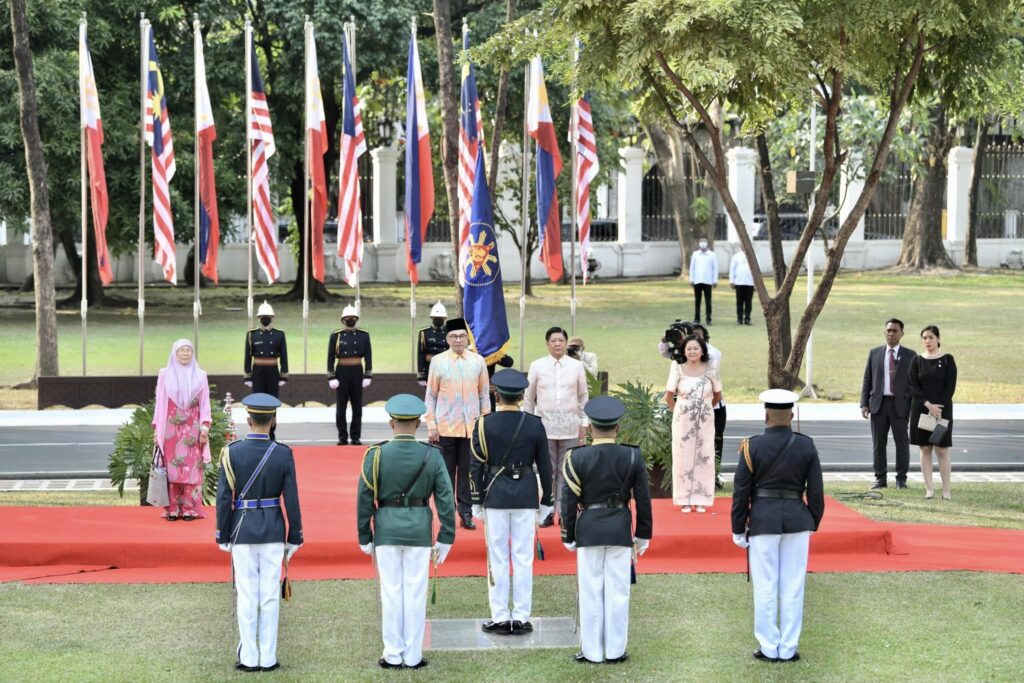
Terdahulu, Anwar diberikan sambutan rasmi di Istana Malacanang dan beliau turut memeriksa kawalan kehormat yang dibarisi 165 anggota Angkatan Tentera Filipina.
Mengiringi Perdana Menteri semasa lawatan rasmi itu ialah isterinya, Datuk Seri Dr Wan Azizah Wan Ismail dan beberapa anggota Kabinet beliau.
Perdana Menteri juga berkata Malaysia kekal komited untuk memainkan peranan yang konstruktif dalam proses damai di Mindanao.
“Malaysia juga akan terus menawarkan bantuan kepada masyarakat Bangsamoro dan pelbagai program pembinaan keupayaan termasuk menerusi Program Kerjasama Teknikal Malaysia (MTCP),” katanya.
Beliau berkata terdapat peluang besar yang boleh diteroka oleh kedua-dua negara sekiranya usaha damai di Mindanao meraih kejayaan.
Sementara itu, Presiden Marcos memuji kemajuan yang dicapai ke arah keamanan yang mampan dan inklusif di Mindanao.
“Ia adalah gabungan selama bertahun-tahun dan usaha serta keikhlasan dalam kalangan semua pihak yang bakal merealisasikan dividen kedamaian tidak lama lagi,” katanya.
Beliau berkata Filipina mengiktiraf sumbangan besar Malaysia dalam proses damai di selatan negara itu.
Katanya beliau berharap sokongan yang ditunjukkan oleh Malaysia akan terus menyumbang kepada kejayaan proses damai dan penubuhan Wilayah Autonomi Bangsamoro.
Menyentuh isu imigran Filipina di Malaysia, Anwar berkata beliau telah meminta bantuan dan kerjasama negara itu untuk mempercepat proses dokumentasi supaya mereka boleh dihantar pulang tepat pada masanya.
“Saya turut mengulangi kesediaan Malaysia untuk mengadakan perbincangan dengan Filipina mengenai kaedah menangani pendatang tanpa izin dari negara itu di Malaysia,” katanya.
— BERNAMA
MANILA, 1 Mac (Bernama) — Perdana Menteri Datuk Seri Anwar Ibrahim tiba di sini hari ini untuk lawatan rasmi selama dua hari ke Republik Filipina.
Anwar diiringi isteri Datuk Seri Dr Wan Azizah Wan Ismail untuk lawatan rasmi kelimanya ke negara ASEAN sejak dilantik sebagai perdana menteri akhir tahun lepas.
Pesawat khas yang membawa perdana menteri dan isteri, mendarat di Pangkalan Udara Villamor pada 12.50 tengah hari.
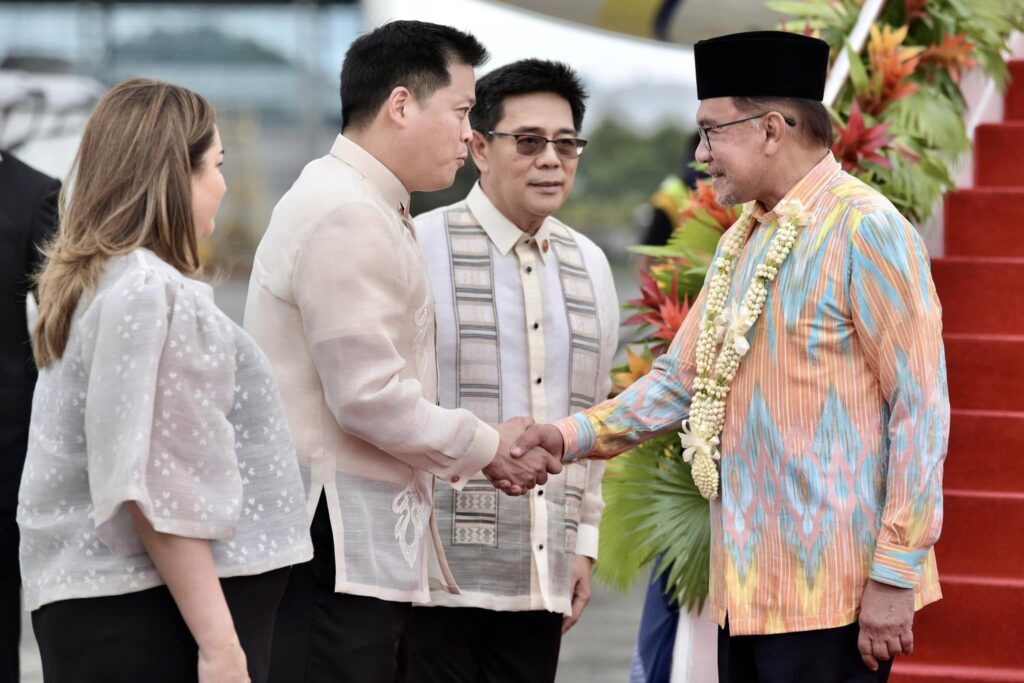
Sebaik tiba di pangkalan udara itu, beliau disambut oleh Setiausaha Kebajikan Sosial dan Pembangunan Filipina Rexlon Gatchalian, selaku menteri pengiring.
Kemudian lagu kebangsaan Malaysia ‘Negaraku’ dimainkan, diikuti lagu kebangsaan Filipina ‘Lupang Hinirang’ (Tanah Terpilih).
Turut hadir Menteri Luar Datuk Seri Dr Zambry Abdul Kadir dan Ketua Setiausaha Kementerian Luar Negeri Datuk Seri Amran Mohamed Zin.
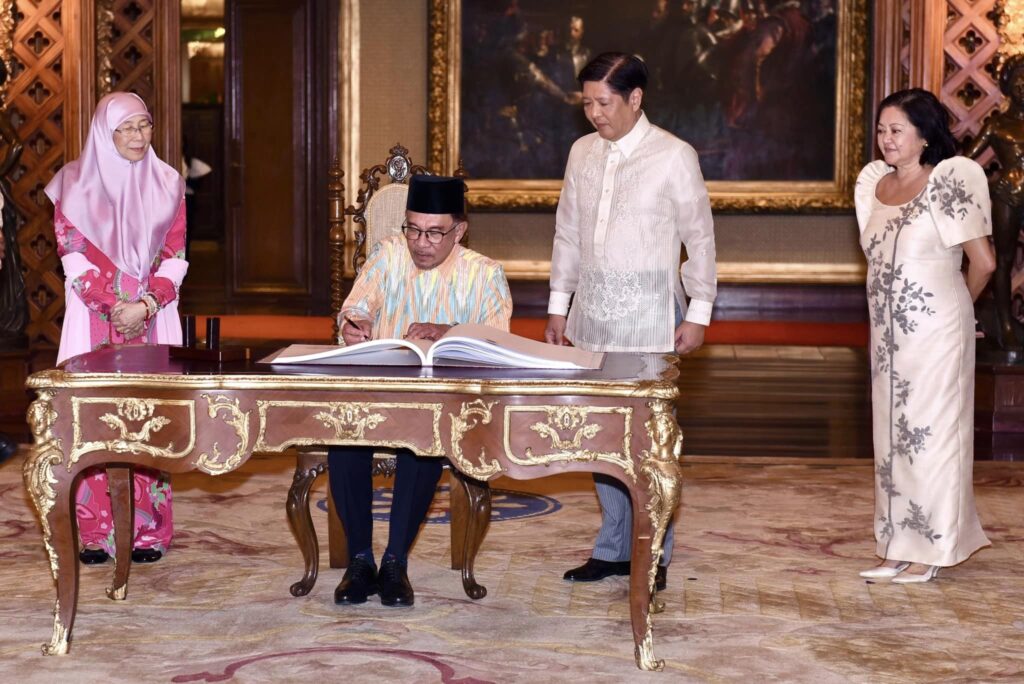
Pada sebelah petang, Anwar dijadual melakukan kunjungan hormat ke atas Presiden Ferdinand R. Marcos Jr di Istana Malacanang dan akan diberikan sambutan negara, diikuti mesyuarat dua hala antara delegasi kedua-dua negara.
Kedua-dua pemimpin juga akan mengadakan sidang media bersama selepas mesyuarat itu.
Esok perdana menteri dijadual menyampaikan syarahan umum bertajuk ‘30 Tahun Selepas Gelombang Kebangkitan Asia: Pengajaran Strategik Buat ASEAN’ di Universiti Filipina yang ditubuhkan pada 1908.
Beliau juga akan menerima anugerah Ijazah Doktor Kehormat daripada senat universiti itu serta mengadakan pertemuan dengan diaspora Malaysia di Filipina.
Perdana Menteri dijangka berlepas pulang ke tanah air pada sebelah petang.
— BERNAMA
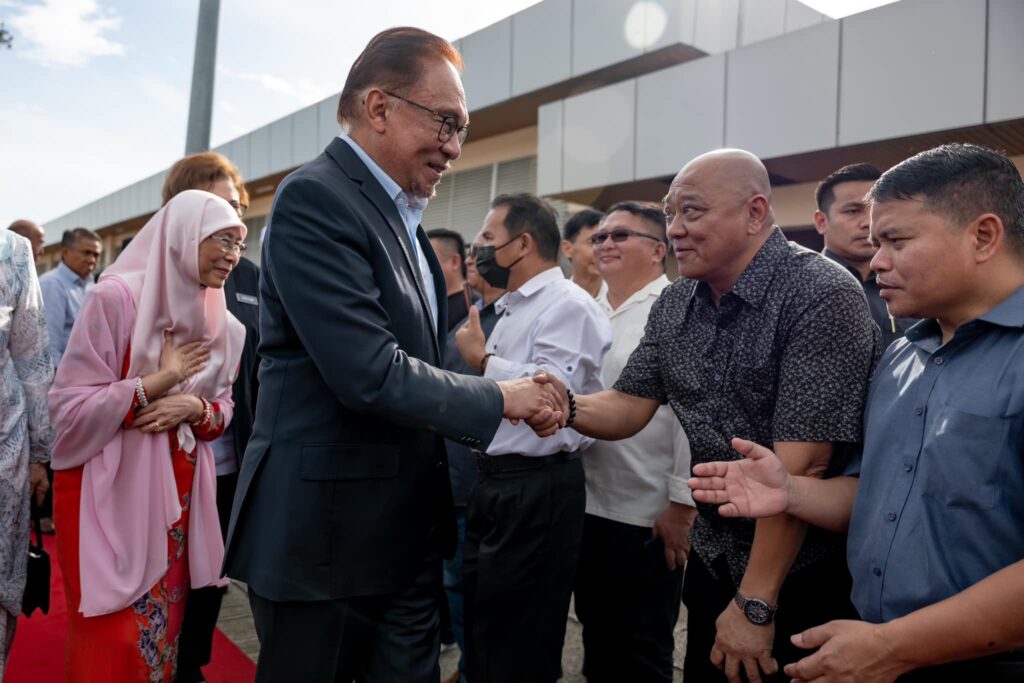
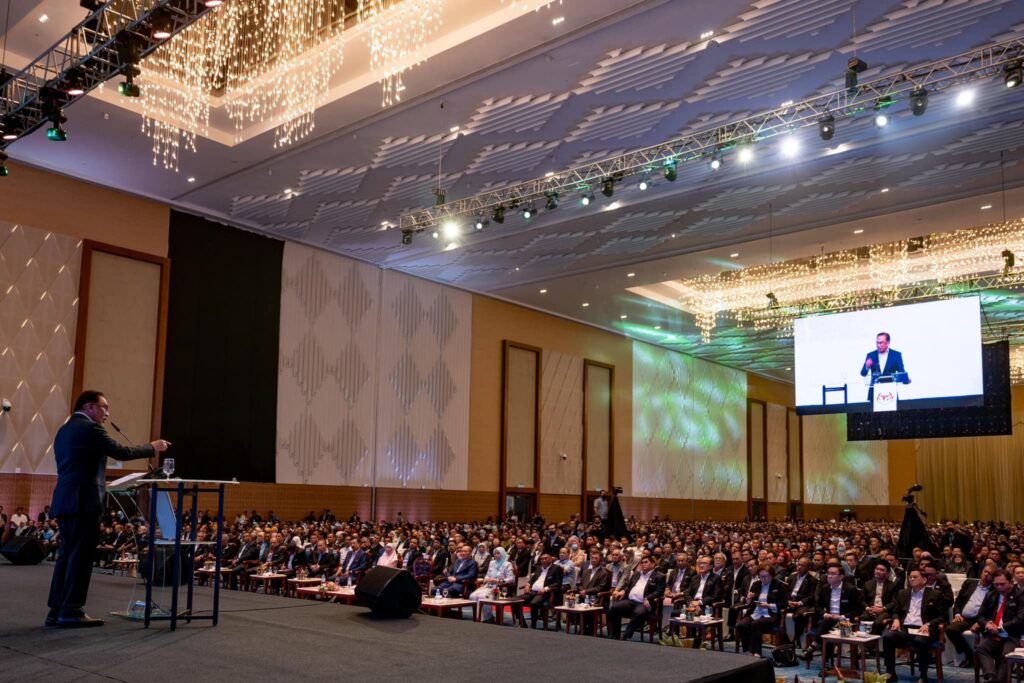
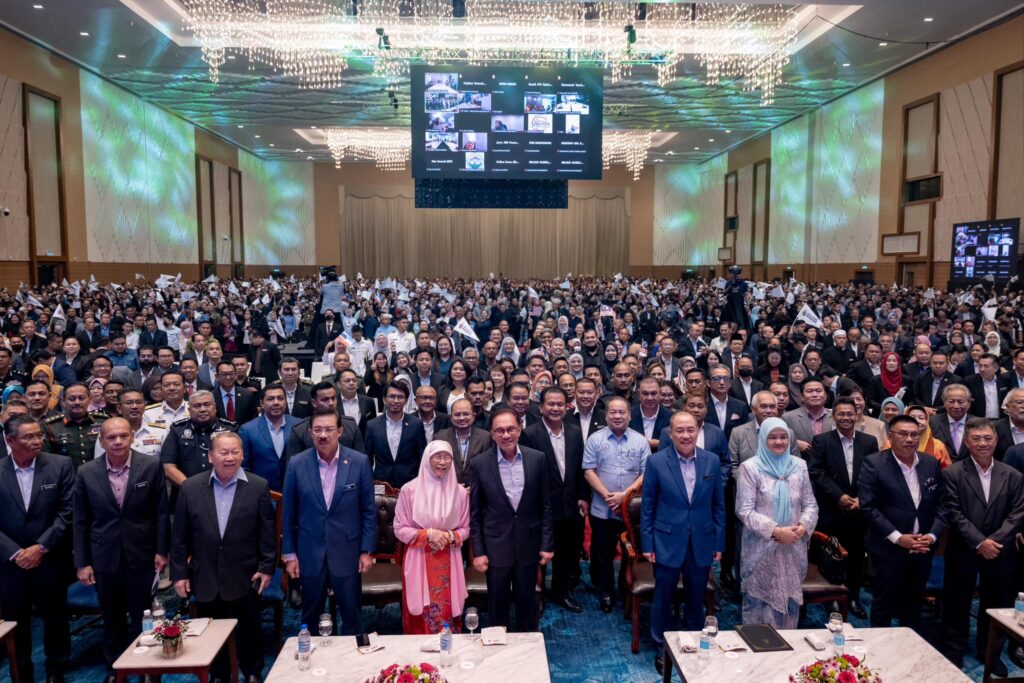
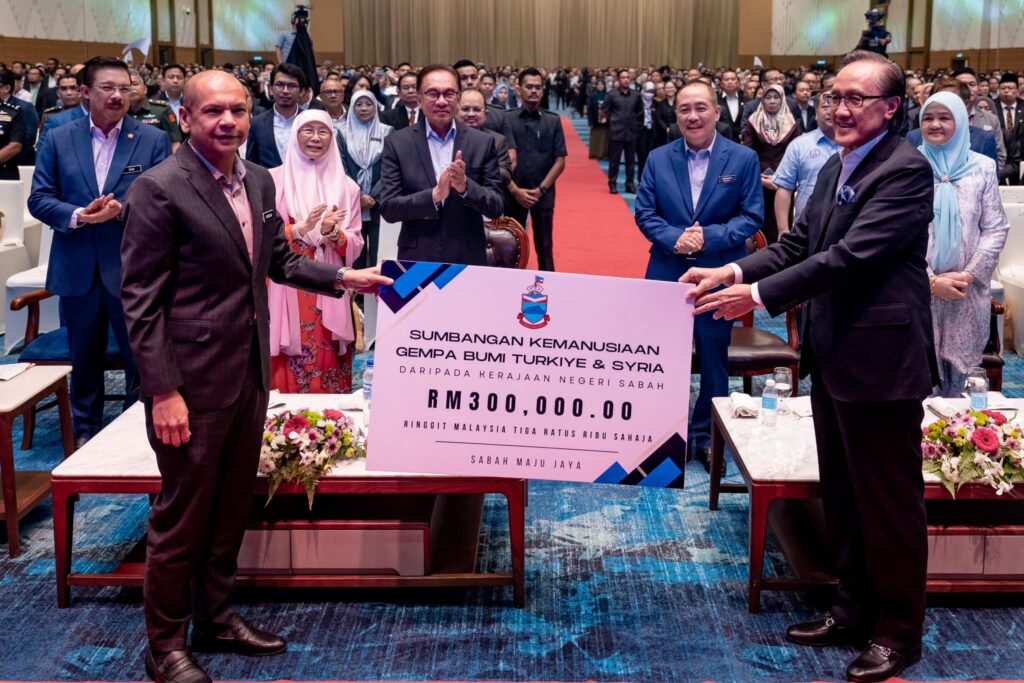
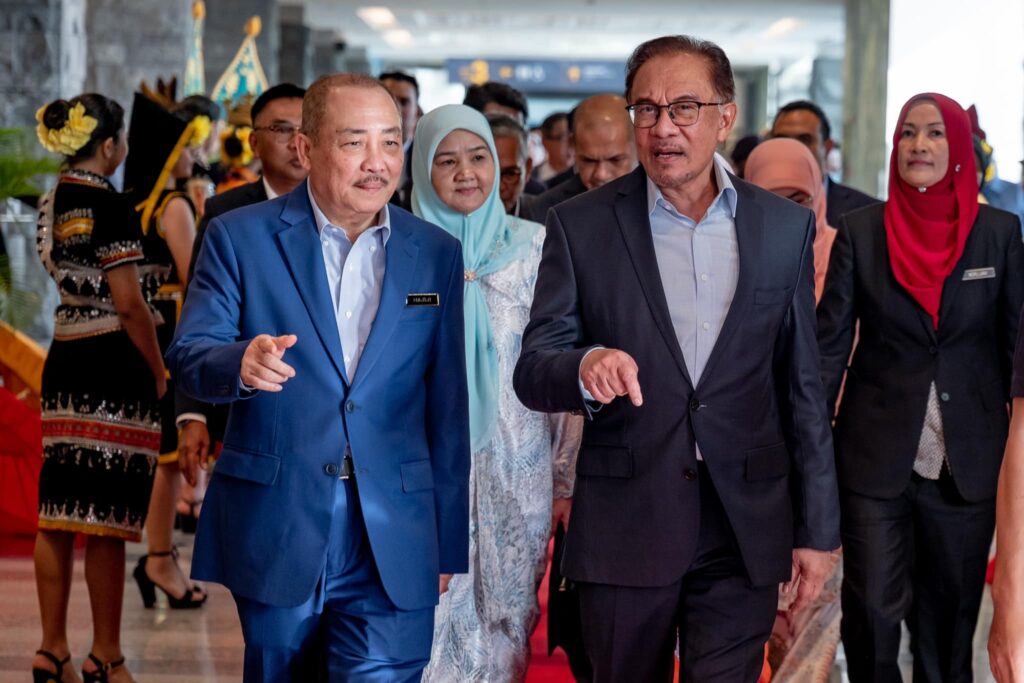
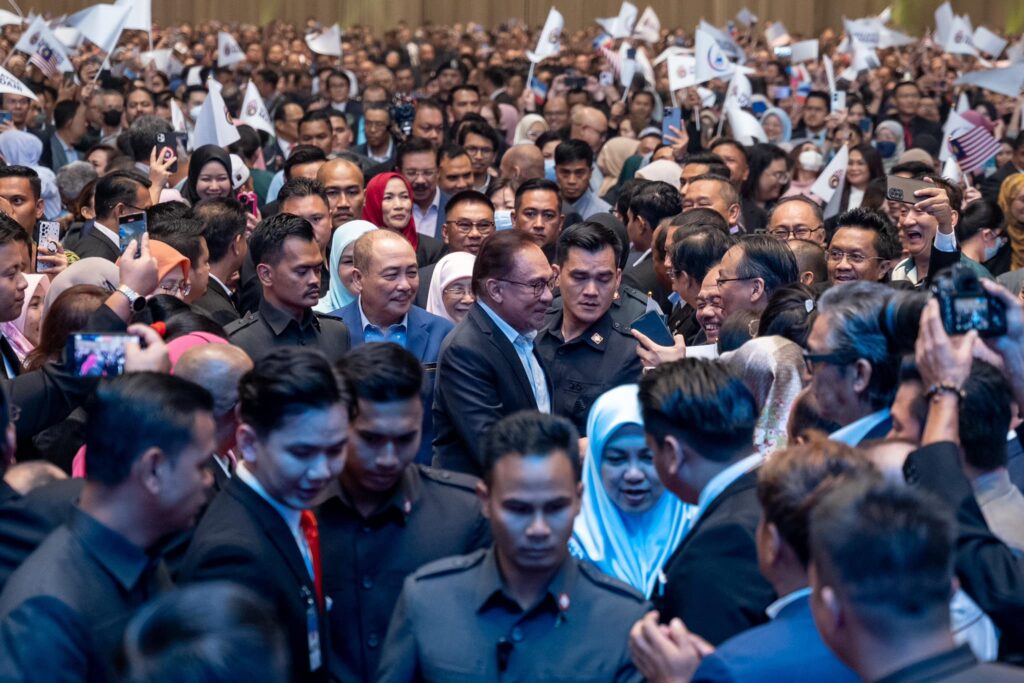
KOTA KINABALU, 28 Feb (Bernama) — Perdana Menteri Datuk Seri Anwar Ibrahim menghadiri majlis makan malam bersama barisan kepimpinan negeri Sabah di sebuah hotel di sini malam ini.
Perdana Menteri dan isteri, Datuk Seri Dr Wan Azizah Wan Ismail, yang tiba pada 8.16 malam, diiringi Ketua Menteri Datuk Seri Hajiji Noor dan isteri, Datin Seri Julia Salag.
Hadir sama Timbalan Ketua Menteri I Datuk Seri Dr Jeffrey Kitingan, Timbalan Ketua Menteri II Datuk Seri Dr Joachim Gunsalam dan Timbalan Ketua Menteri III Datuk Shahelmey Yahya serta Ahli Jemaah Menteri Kerajaan Sabah.
Pada majlis itu, tetamu dihiburkan dengan persembahan lagu-lagu nostalgia antaranya Hati Lebur Jadi Debu serta Madu dan Racun selain lagu tempatan.
Terdahulu, Perdana Menteri menunaikan solat Maghrib berjemaah bersama Hajiji dan masyarakat setempat di Masjid Negeri di Sembulan.
Anwar tiba petang tadi bagi menghadiri Majlis Amanat Perdana Menteri Kepada Penjawat Awam Negeri dan Persekutuan di Pusat Konvensyen Antarabangsa Sabah sempena lawatan dua hari ke negeri itu.
Esok, beliau dijadual menghadap Yang Dipertua Negeri Tun Juhar Mahiruddin di Istana Seri Kinabalu sebelum berlepas ke Filipina untuk lawatan rasmi dua hari ke republik itu.
— BERNAMA
KOTA KINABALU, 28 Feb (Bernama) — Perdana Menteri Datuk Seri Anwar Ibrahim berkata kadar gaji dan upah penjawat awam akan dibincang semula setelah ‘kantung’ kewangan negara bertambah baik selain defisit kewangan negara dapat dikurangkan.
Perdana Menteri berkata secara peribadi, beliau tidak berpuas hati apabila melihat kadar gaji dan upah penjawat awam berbanding tugas serta komitmen yang diberikan namun ia perlu dinilai berdasarkan kemampuan kewangan negara ketika ini.
“Kalau kantung bertambah baik defisit dikurangkan, kita boleh (naikkan gaji serta upah), dan sekarang bila saya tengok penjawat awam buat kerja baik antaranya di negeri kemudian hasil bertambah, proses itu boleh dipercepat.
“Cuma untuk hari ini saya fikir sukarlah, itu nanti kita bincang dahulu,” katanya pada sidang media selepas menyampaikan amanat kepada penjawat awam negeri dan Persekutuan di Pusat Konvensyen Antarabangsa Sabah hari ini.
Turut hadir Ketua Menteri Datuk Seri Hajiji Noor, Menteri Dalam Negeri Datuk Seri Saifuddin Nasution Ismail dan Menteri di Jabatan Perdana Menteri (Hal Ehwal Sabah, Sarawak dan Tugas-Tugas Khas) Datuk Armizan Mohd Ali.
Ketika menyampaikan amanat pada majlis itu, Anwar berkata negara berdepan defisit fisikal sebanyak 5.6 peratus dan jumlah hutang kira-kira RM1.5 trilion yang perlu diberi keutamaan dalam usaha memastikan kemakmuran negara terutama dari segi ekonomi.
“Beberapa bulan ini bila pulangan kita dua bilion, tiga bilion, lapan bilion masuk dalam kantung kewangan negara, satu sen pun tidak bocor, kalau bocor siaplah… semua tahulah saya buat macam macam mana.
“Kalau kantung negara cukup, penjawat awam percayalah saya akan beri keutamaan kepada nasib anda semua… kerana khidmat dan dedikasi anda wajar diberikan gaji dan upah yang lebih baik,” katanya.
Justeru, beliau menyeru kepada semua penjawat awam supaya mengamalkan integriti dan tadbir urus yang baik dalam memastikan Malaysia dapat diurus dengan sempurna selain kewangan negara dapat dipulihkan dengan segera.
“Saudara dan saudari semua berkerjalah dengan baik kerana banyak lagi yang kita belum selesaikan misalnya isu kemiskinan dan Lebuhraya Pan Borneo, kita selesaikan untuk rakyat kita dengan segera,” katanya.
Ditanya mengenai gesaan agar Labuan dikembalikan kepada Sabah dalam sidang media itu, Anwar berkata apa yang penting ketika ini ialah Kerajaan Persekutuan menjalin kerjasama dengan Kerajaan Negeri Sabah untuk memulihkan Wilayah Persekutuan itu sebagai pusat kewangan yang kukuh.
“Ia bukan satu isu. Isu utama ialah kita menyaksikan beberapa pembangunan yang lembap di Labuan jadi kita perlu mengambil langkah di peringkat Persekutuan dan kerajaan negeri untuk cuba memulihkan keadaan di Labuan,” katanya.
Menyentuh cadangan membina jambatan di antara Sabah dan Labuan, Perdana Menteri berkata perkara itu perlu dilihat dari sudut ekonomi dan ketika ini, kerajaan pusat mengambil pendirian untuk berbelanja setakat yang termampu.
Pada 26 Jan lepas, Ahli Parlimen Labuan Datuk Dr Suhaili Abd Rahman mendakwa Kerajaan Persekutuan tidak serius dalam membangunkannya dan gesaan agar ia dikembalikan kepada Sabah bukanlah sesuatu yang tidak munasabah memandangkan ekonomi pulau bebas cukai itu semakin lemah sejak diwartakan sebagai Wilayah Persekutuan kira-kira 38 tahun lalu.
— BERNAMA
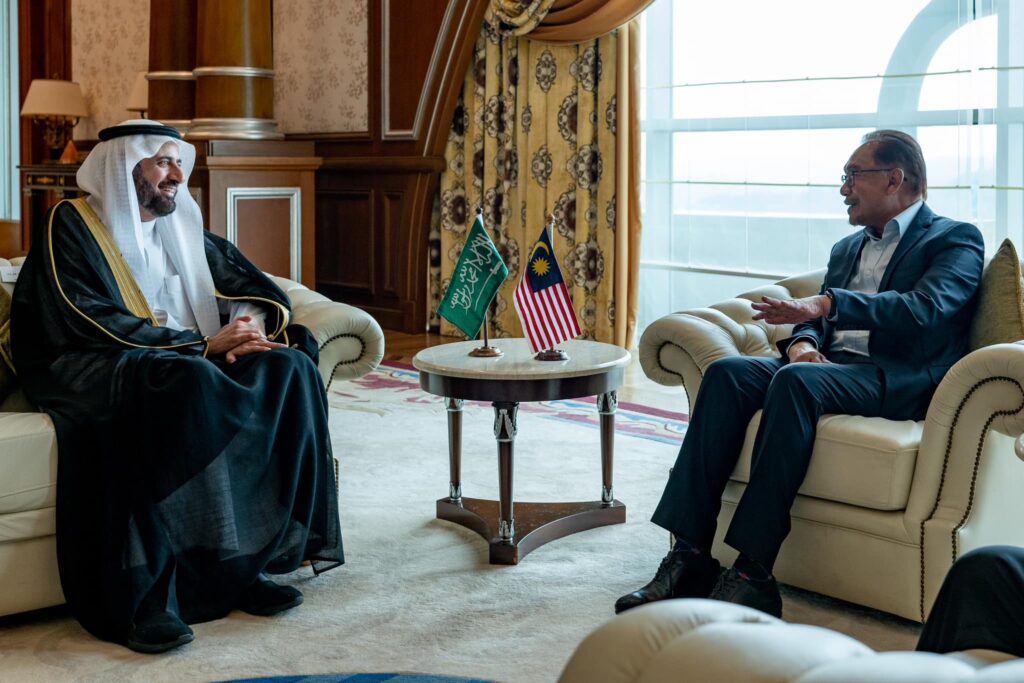
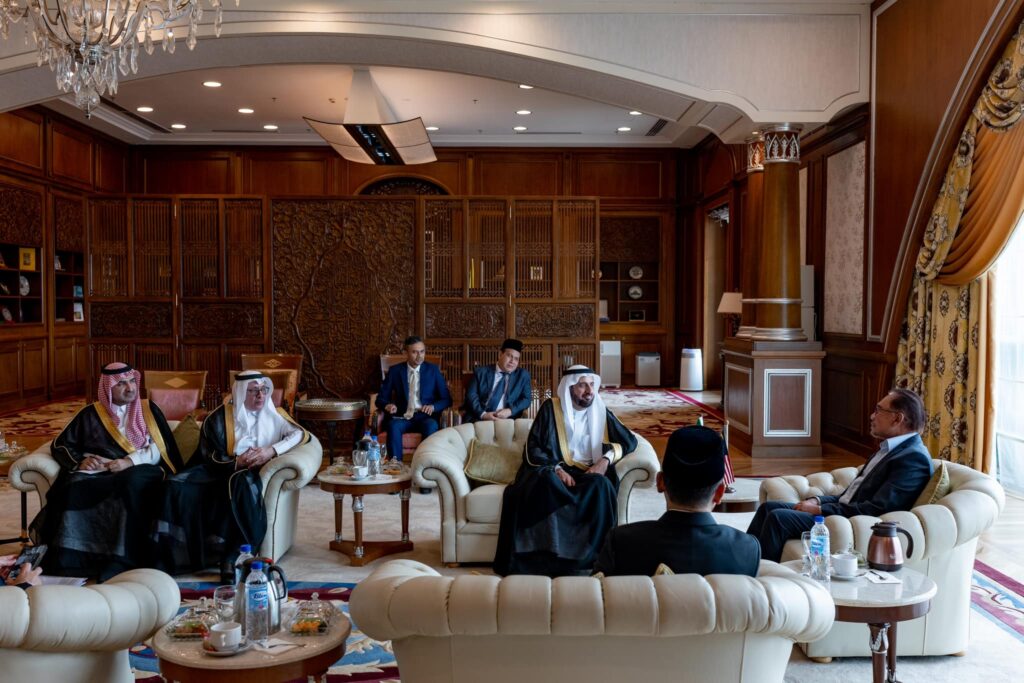
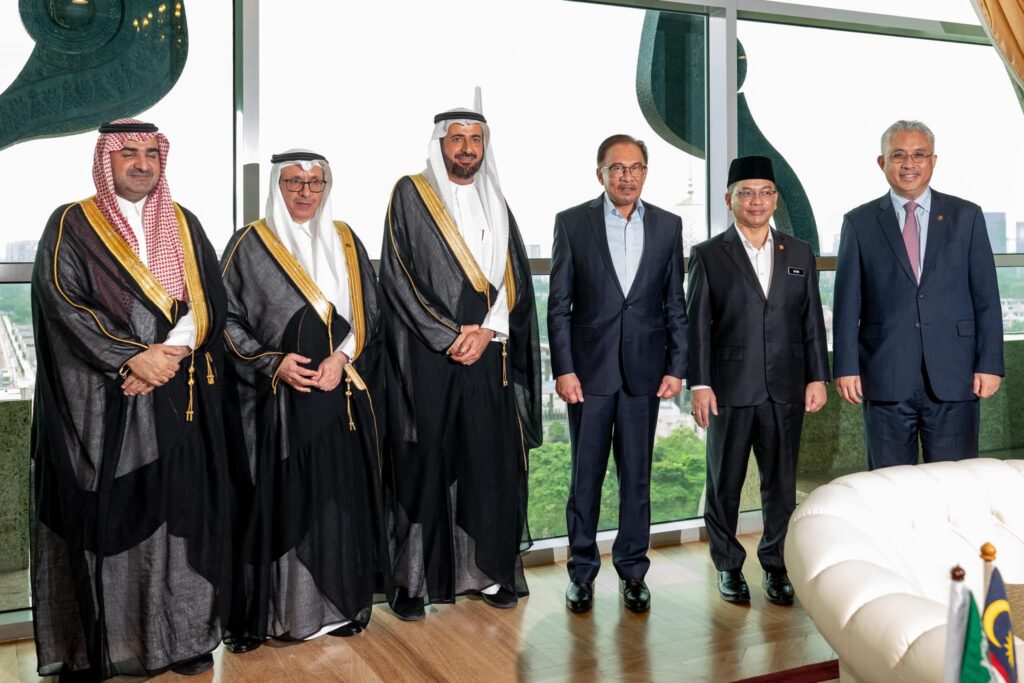
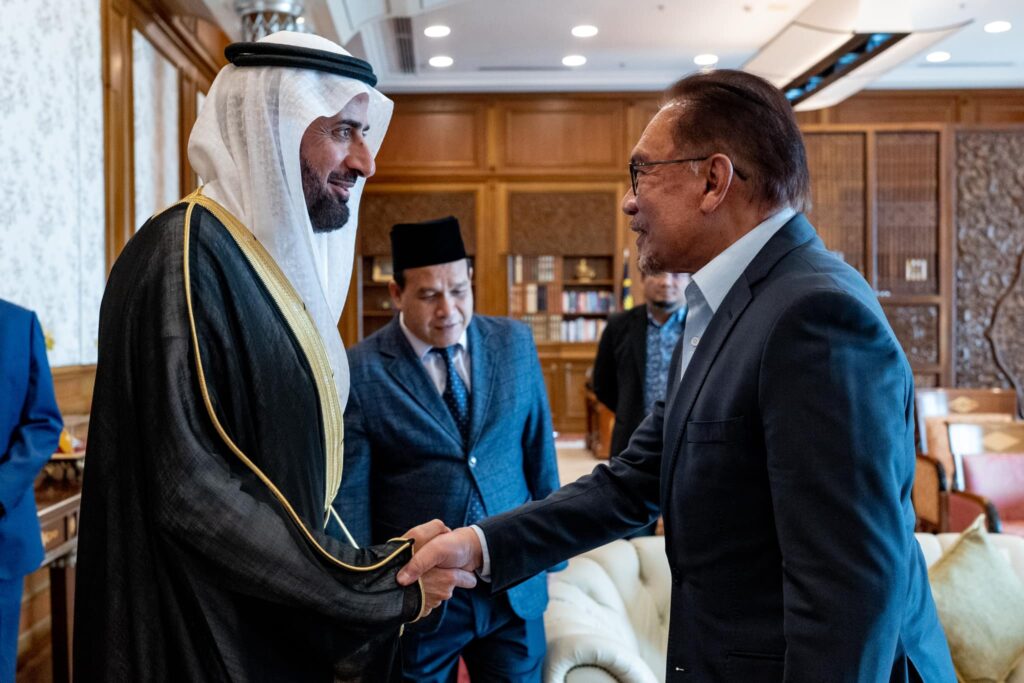
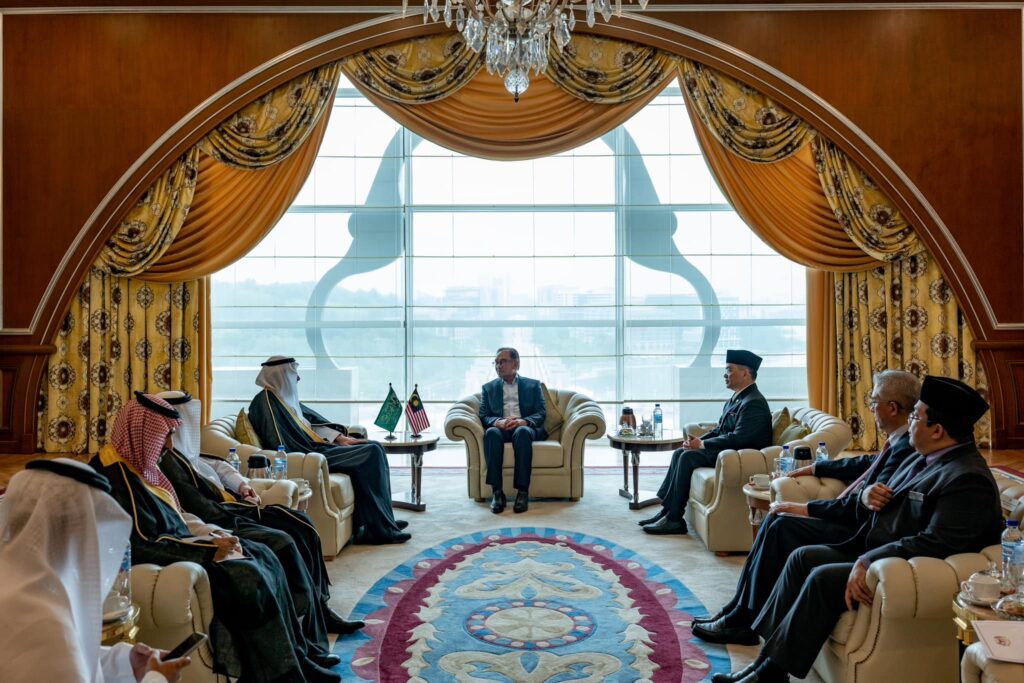
PUTRAJAYA, 28 Feb (Bernama) — Perdana Menteri Datuk Seri Anwar Ibrahim hari ini menerima kunjungan hormat Menteri Haji dan Umrah Arab Saudi Dr Tawfiq Fawzan Al-Rabiah, serta membincangkan kerjasama yang lebih erat terutama terkait isu melancarkan pelaksanaan haji dan umrah bagi rakyat Malaysia.
Pertemuan yang berlangsung kira-kira satu jam di Perdana Putra di sini itu ketika Tawfiq berada di negara ini sempena lawatan kerja tiga hari beliau bermula Ahad, turut disertai Menteri di Jabatan Perdana Menteri (Hal Ehwal Agama) Datuk Dr Mohd Na’im Mokhtar.
Anwar dalam catatan di laman sosial miliknya sempena pertemuan itu berkata turut dibincangkan ialah inisiatif-inisiatif yang boleh dilaksanakan untuk meningkatkan kerjasama dalam bidang lain termasuk pelancongan, pendidikan, pelaburan dan perdagangan.
“Hubungan rapat Malaysia dan Arab Saudi yang telah terjalin selama ini diharap akan menjadi lebih erat demi kemaslahatan rakyat Malaysia khasnya dan umat Islam amnya,” kata Anwar.
Semalam, Mohd Na’im dalam pertemuannya bersama Tawfiq telah menyampaikan hasrat Malaysia kepada Arab Saudi untuk mendapatkan tambahan kuota haji kepada 31,950 pada tahun hadapan, selaras dengan pertambahan jumlah penduduk negara.
Kuota haji untuk jemaah Malaysia bagi musim haji tahun ini ialah 31,600.
Tawfiq dalam lawatan kerja ke Malaysia turut menerima penganugerahan Ijazah Kehormat Doktor Pengurusan oleh Universiti Teknologi Malaysia (UTM) semalam, atas sumbangan besar beliau dalam penyelarasan haji dan umrah.
— BERNAMA